
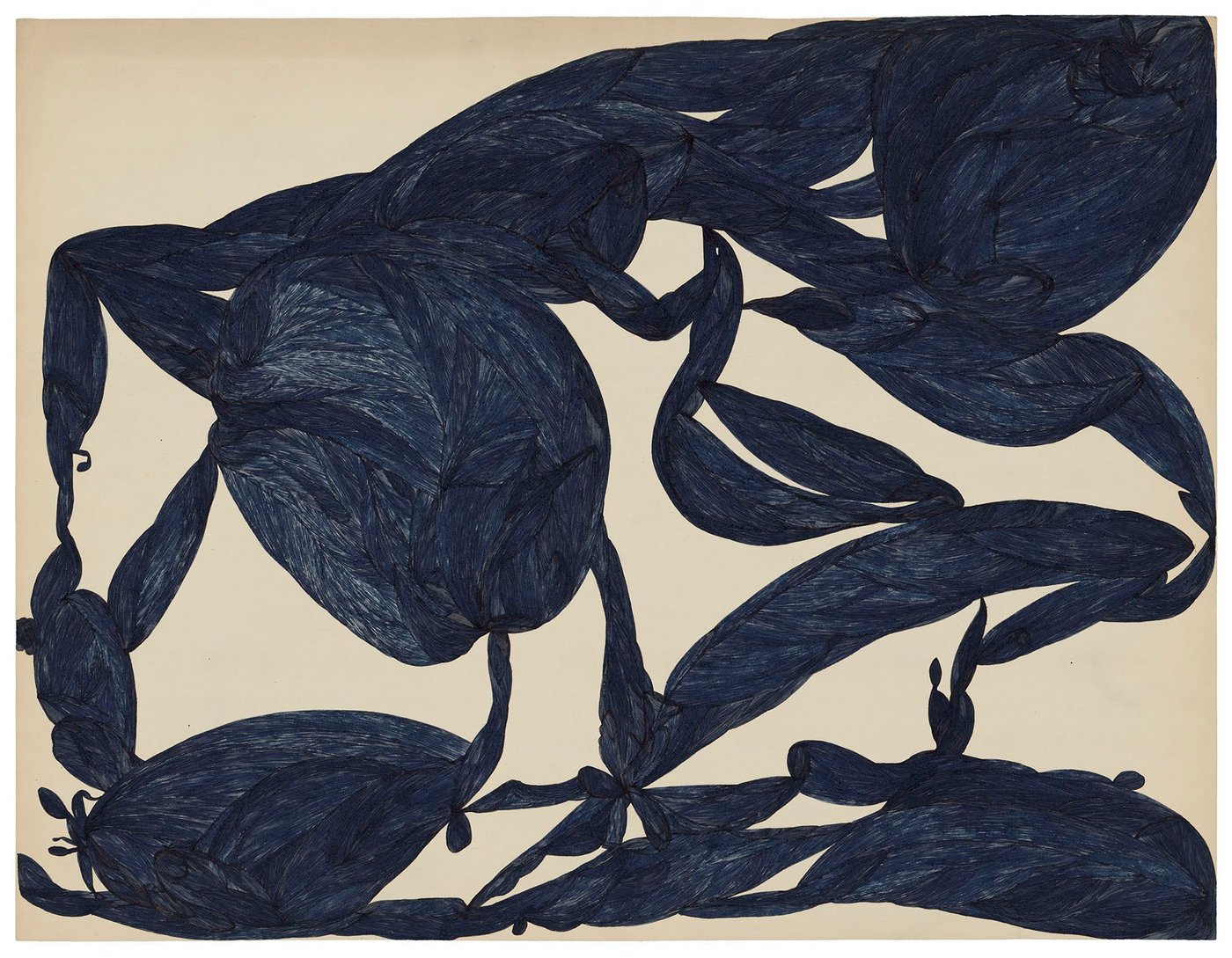
Art Brut works are created by self-taught artists who are rebellious or impervious to collective norms and values, creating without concern for public criticism or the opinions of others. With no need for recognition or approval, these individuals conceive a universe for their own use. Their works, created using generally unconventional means and materials, are free from influences from artistic tradition and employ unique modes of representation.
The concept of Art Brut was developed by the French painter Jean Dubuffet. In 1945, he began collecting objects created by residents of psychiatric hospitals, prisoners, and people who were eccentric, solitary, or outcasts. He perceived this marginal creation as a “pure, raw artistic operation, reinvented in all its phases by its author, based solely on his own impulses.” The notion of Art Brut is thus based on social characteristics and aesthetic particularities.