
Art Brut in Switzerland – From the Origins of the Collection to the Present
From 28 February 2026 to 27 September 2026
Exhibition under construction
Until November 27, only part of the Permanent Collection is visible, due to the installation of our upcoming exhibition "The World of Armand Schulthess", from November 27, 2026 to April 25, 2027

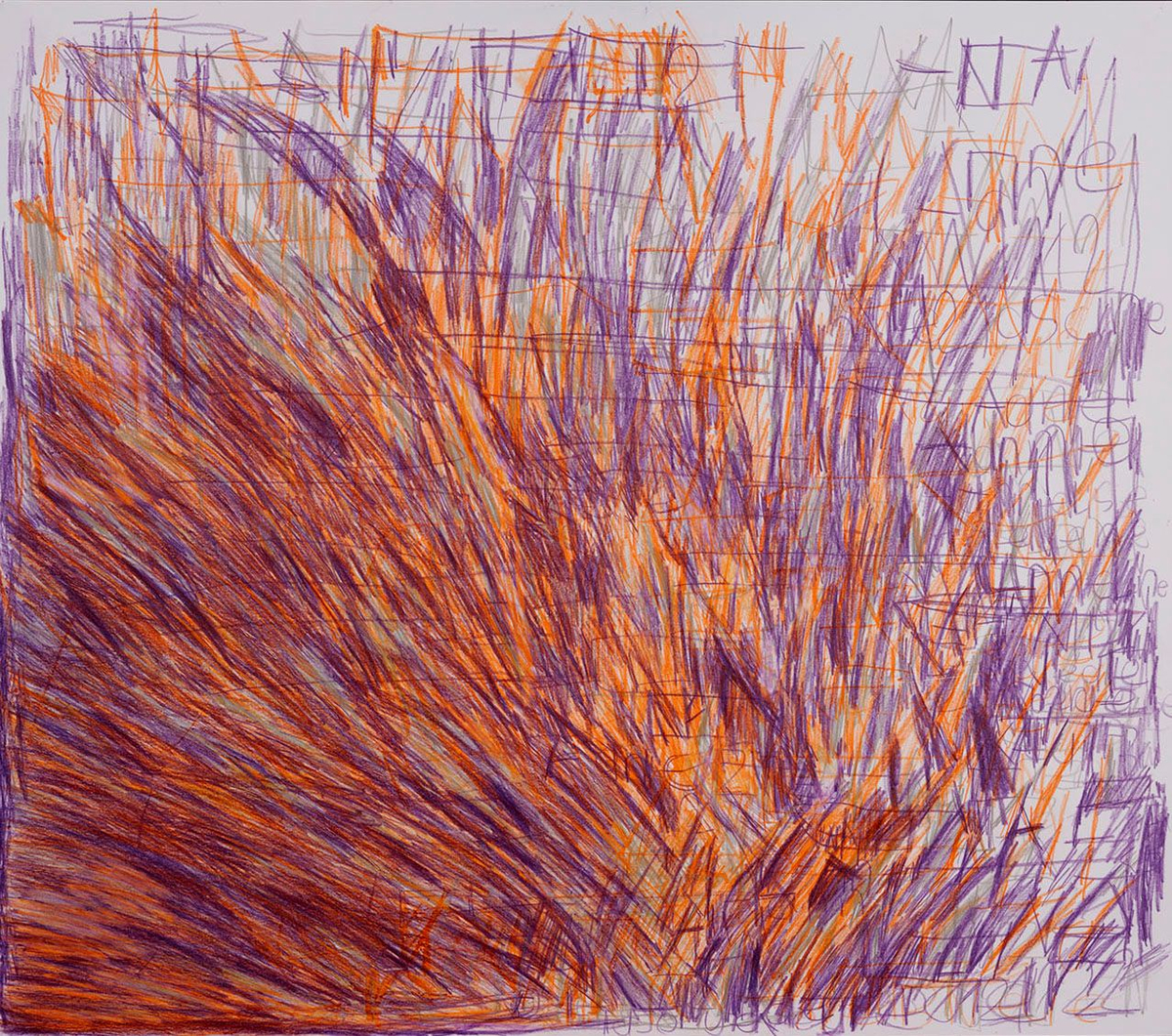
1950-2017, Switzerland
Anne-Lise Jeanneret (1950-2017) was born into a rural family in La Sagne (Switzerland), in the canton of Neuchâtel. Suffering from trisomy, she was raised in her place of birth and very early on devoted herself to creative activities, which she continued until 2015. In 2001, following the death of her mother, she was taken in by the Fondation Les Perce-Neige, a centre near Neuchâtel, where she had been a visitor since 1968.
Jeanneret’s compositions are distinguished by exuberant colour and great intensity. They all have a similar structure, being based on sketches – filled with writings – that border on abstraction and explode with a combination of powerful colour variations and the energy of her physical involvement. She worked in successive layers: she would sometimes draw figures, animals, houses, or boats – as a form of tribute to Lake Neuchâtel, to which she was very attached – and then cover them with a multitude of lines. Her materials were oil pastels and coloured pencils on paper, which she placed on an easel. In this way, she addressed her support not simply as a sheet of paper, but as a canvas onto which she could project her world, though with a tendency towards abstraction.
Related to the author