
Art Brut in Switzerland – From the Origins of the Collection to the Present
From 28 February 2026 to 27 September 2026
Exhibition under construction
Until November 27, only part of the Permanent Collection is visible, due to the installation of our upcoming exhibition "The World of Armand Schulthess", from November 27, 2026 to April 25, 2027

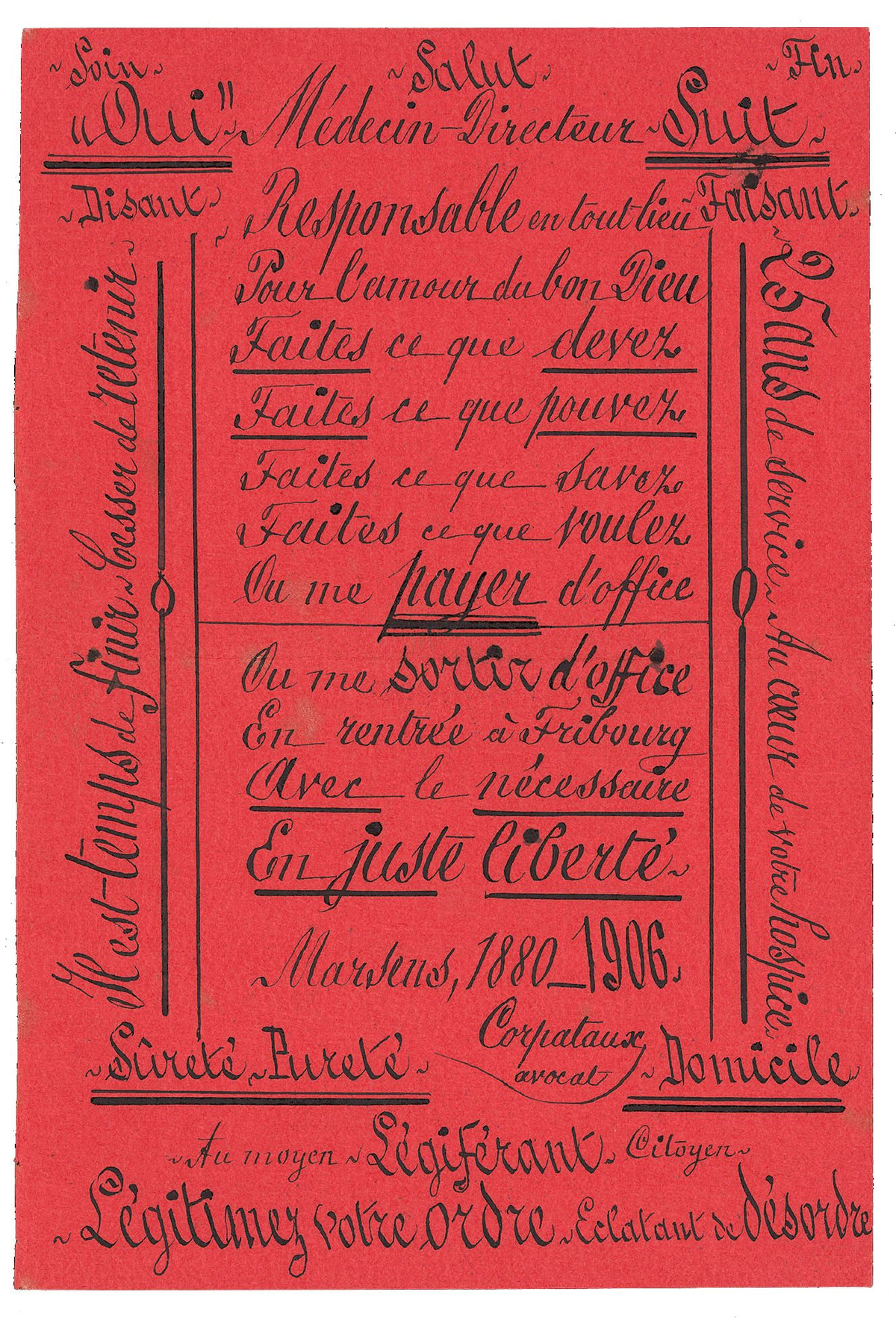
1838-1917, Switzerland
Gaspard Corpataux (1838-1917) was born in Fribourg (Switzerland). A lawyer by profession, at the age of forty-four he was committed to Marsens hospice (which later was transformed into Marsens cantonal psychiatric hospital as a result of ‘indecent assaults’).
Between 1903 and 1916, he wrote numerous letters to the hospice’s medical director, members of the Fribourg Council of State, and federal councillors. Composed during the last period of his life, they repeatedly pleaded for his release from the hospital, but his requests were never met with success.
Rarely making use of capital letters, his letters are distinguished by the pliancy of their structure; they were composed with a pen and India ink on paper from school exercise books or squared administrative paper, sometimes red or green. Occasionally written on both the front and back of the sheet, his letters are written in meticulous handwriting, similar to calligraphy. He drew attention to words he considered important by underlining them either once or twice. Unable to regain his freedom, Corpataux liberated his voice from confinement through his inventive presentation of language.
Related to the author