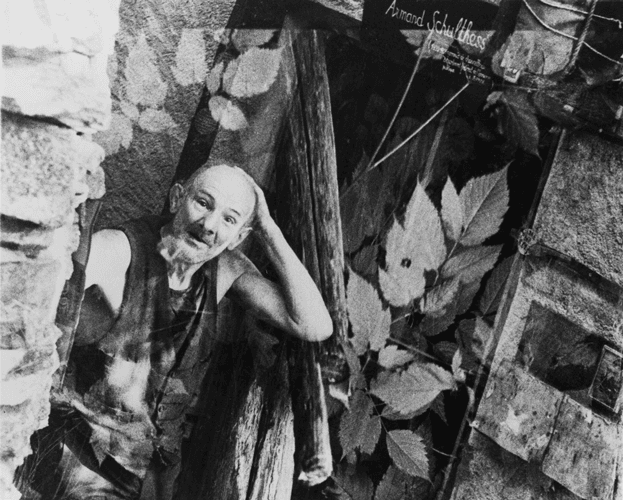
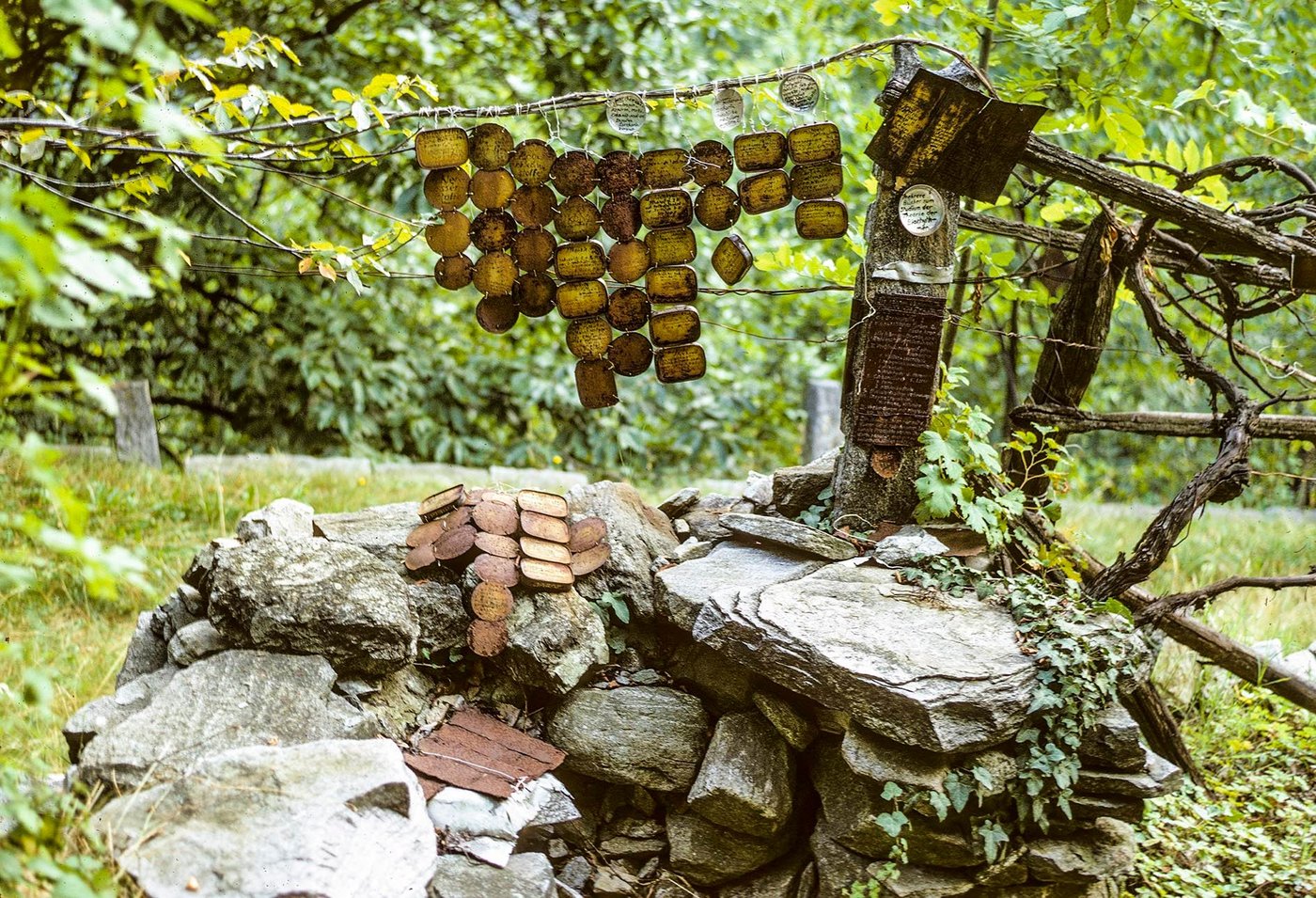
Schulthess, who was born in Neuchâtel, obtained a business degree before completing an apprenticeship in an import-export company. He later ran his own business making women’s clothing – first in Zurich and later in Geneva – until the company went bankrupt. In 1939, he took a job as an office worker at the Swiss Federal Department of Economic Affairs in Bern. At the age of 50, Schulthess abruptly turned his back on his career and social life. He quit his civil service job for good and retreated to a country house in Ticino he had bought 10 years earlier, seeking both physical and mental isolation. There, cut off from the outside world, he devoted the rest of his life to transforming the vast grounds surrounding his home. After his death, his heirs decided to destroy his work. All that survived were a handful of his books and a series of assemblages made from metal plates, wire and branches.
Swiss-French writer S. Corinna Bille was the first to publicly show a real interest in Schulthess and his work. After visiting his garden in Ticino – a reflection of his encyclopaedic knowledge – she wrote Le propriétaire (1955), a short story about her experience there and the main themes she encountered. The garden and its assemblages also made a powerful impression on Swiss-German writer Max Frisch, inspiring his well-known 1979 novella Der Mensch erscheint im Holozän (published in English in 1980 as Man in the Holocene).
Swiss-German filmmaker and photographer Hans-Ulrich Schlumpf also documented this monumental creation, preserving a record of it before it was destroyed. The exhibition sets his images in dialogue with close to 300 pieces rescued from the site at the last minute. Among them is a substantial group of items acquired by the Collection de l’Art Brut in 2024, now going on display for the first time as part of the museum’s 50th anniversary celebration.
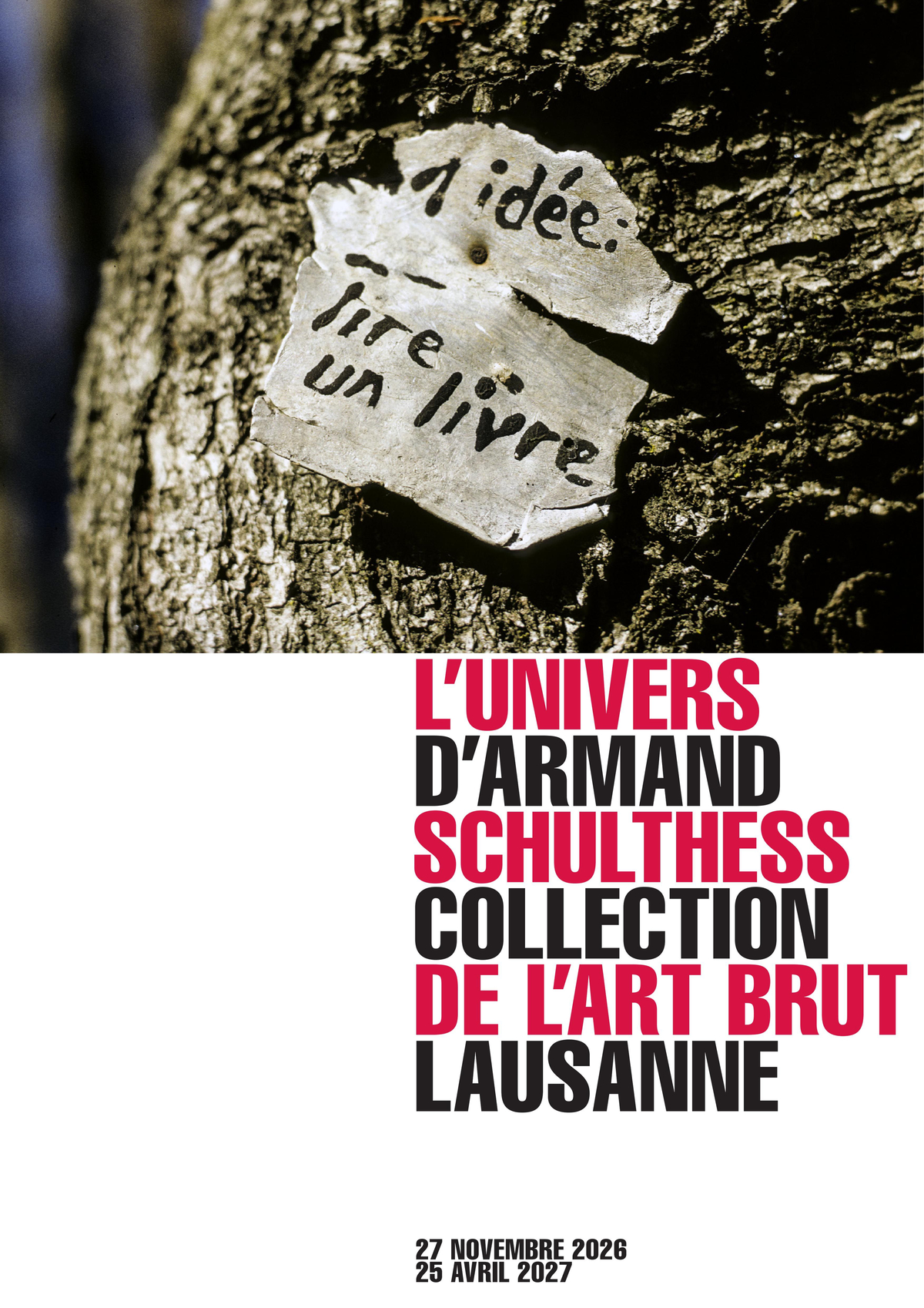
The Collection de l’Art Brut’s very first temporary exhibition – held in 1976, the year the museum opened – was devoted to Schulthess and curated by Schlumpf. Now, 50 years on, this new-look show features previously unseen pieces and invites us to view the artist’s remarkable body of work with fresh eyes.
Curated by Hans-Ulrich Schlumpf